Self-driving isn’t something envisioned for clothing in the far-off future; it is already changing the way we travel, commute, and deliver goods. One of the world’s top ride-hailing and mobility companies, Uber has invested heavily in developing self-driving cars: Uber autonomous backup driver accident legal responsibility. So while this innovation holds out the promise of safer roads and more efficient transportation, it also poses a hard question: When something goes wrong, who do you blame?
This article on Technologyforus.com examines Uber’s autonomous backup driver crash legal responsibility, delving into determining liability if an event occurs during an Uber self-driving car accident involving a human backup driver.
The Emergence of Self-Driving Cars and Uber’s Impact:
With no steering wheels and in some cases no pedals either, autonomous vehicles are completely reliant on artificial intelligence, sensors, cameras, and machine learning systems to recognize objects around them and respond with the appropriate driving response. Like others, Uber has rolled out a program that features vehicles operating in self-driving mode but not yet fully autonomous (there’s a human backup driver behind the wheel): Uber autonomous backup driver accident legal responsibility.
Such a hybrid model can exist only because the current technology is not yet ideal. The backup driver is supposed to stay awake, watch the system, and immediately step in when a situation is too dangerous for the car to handle itself.
But such a fusion of machine intelligence and human oversight blurs the lines in legal gray areas. Blame in such accidents is significantly more difficult to establish than in typical crashes.
Uber Self-Driving Backup Driver Accident Legal Responsibility Explained:
credit Uber autonomous backup driver accident legal responsibility, we can’t find fault in someone for blame, so the question to ask is if the accident happened because of human actions or due to system problems and a failure. Relative to typical auto accidents, there are a variety of potential parties who may be at fault:
- The backup driver
- Uber as the vehicle operator
- The software or hardware manufacturer
- And in a few rare instances, even government departments.
Every single crash is examined separately, using information on driver behavior as well as the performance of the system: Uber autonomous backup driver accident legal responsibility.
Who Is the Backup Driver? And Why Are They Absolutely Crucial?
A backup driver is not a mere passenger; they are trained to be a safety monitor. Their role is to:
- Watch the road at all times
- This is when the process is failing
- Take control in emergencies
- Follow Uber’s internal safety protocols
In the event of a driver being distracted, drowsy, or even simply not taking action when they should have, uber autonomous backup driver accident legal responsibility the driver might be looked on as negligent. In these instances, the law can make them personally liable.
Uber Self-Driving Backup Driver Accident Liability and Driver Error
If the evidence indicates that the backup driver disregarded warnings, failed to act, or violated protocols, then uber self-driving backup driver accident responsibility may lie squarely with that person.
Courts can rely on traditional negligence laws, turning to whether a “reasonable person” in the same position would have acted differently. If the answer is that there is such testing is possible, whoever the backup driver was may potentially be legally responsible.
Uber’s Liability as a Tech Company: Uber autonomous backup driver accident legal responsibility
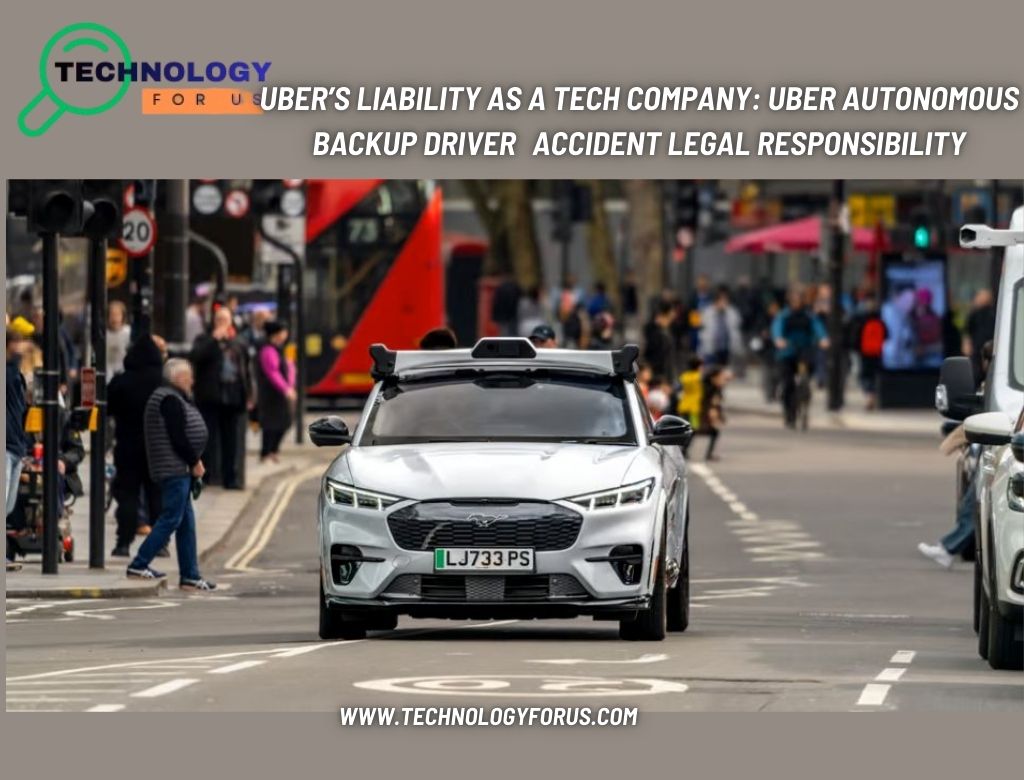
Uber is not only a car-hailing service; it is also a technology venture. This leaves open the possibility that it may be held liable under product liability laws if its self-driving system:
- Malfunctions
- Contains faulty software
- Has defective sensors
- Fails to recognize hazards
- No notice of known limitations
If the accident was due to a system failure as opposed to human conduct, Uber has opened itself up for potential legal claims.
Uber Self-Driving Backup Driver Accident Liability and Shared Blame:
Most accidents are not the result of a single cause. For instance, the system might not have recognized a pedestrian, and the safety driver may also have taken too long to intervene. Under such circumstances, the responsibility for uber self-driving backup driver crash liability can be apportioned.
This is also known as comparative negligence, and it involves courts apportioning blame to different sides. Compensation is then apportioned based on these percentages.
Data and the Black Box: Uber autonomous backup driver accident legal responsibility
Self-driving cars are hoarders of data. Cameras, GPS, speed measurement devices, and internal logs function akin to a “black box”. And from this, investigators can figure out:
- Whether the system issued warnings
- If the backup driver responded
- When AI became subservient to the human
- The speed of the car
This information is critical in determining Uber autonomous backup driver accident legal responsibility in the court of law.
An accident when stating that they will hold a human responsible: the backup driver of an autonomous Uber. Legal liability depends on jurisdiction.
Laws vary across regions. Some states consider self-driving systems as “drivers”; some hold the human driver solely responsible. Clear frameworks are still being developed by regulatory bodies.
TechnologyForUS. com monitors such legal movements and believes that such developments can serve as a reference for where this area of law goes in the areas of transportation, insurance, and safety.
Impact on the insurance and victim compensation: Uber autonomous backup driver accident legal responsibility
A major issue is who would foot the bill for damages. Compensation in the Event of Violation. The compensation shall, as appropriate to the specific case, be made out of:
- The backup driver’s insurance
- Uber’s corporate insurance
- A product manufacturer’s liability coverage
It’s this messy issue that makes uber autonomous backup driver accident legal responsibility so frightening when it comes to consumers and lawmakers.
Ethical Responsibilities Beyond the Law: Uber autonomous backup driver accident legal responsibility
Legal liability is not the only issue. But then there is that equally important ethical obligation to safeguard human life. Uber and other tech companies need to be certain that their systems are vetted safely, transparently, and responsibly. Accountability is key to trust in autonomous tech.
Uber Self-Driving Back-Up Driver Wreck Legal Responsibility and Solving for the Future of Transportation
Laws will change as self-driving cars become more prevalent. Clear rules will give greater protection to victims, steer companies, and shore up public trust in self-driving systems.
If anything, I think the takeaway here from this autonomous backup driver accident legal responsibility story is that we’re learning now what responsibility humans will bear when AI and humans mix on public streets.
Frequently Asked Questions:
Q1: What is the job of the backup driver for an Uber self-driving car?
A: A safety driver is watching the system and can intervene if the car isn’t managing a situation safely.
Q2: If there’s an autonomous crash, can you sue Uber?
A: Yes. Uber may be legally responsible if a system malfunction or lack of proper training led to the accident.
Q3: Is the second driver always to blame?
A: No. Fault is one such matter: Was the human in question acting sensibly, and was the system functioning as it should have?
Q4: How is fault proven?
A: Investigators rely on vehicle data, video recordings, and system logs.
Q5: Will autonomous laws change?
A: Yes. Countries around the world are revising their laws in response to technological innovations.
Conclusion:
Artificial intelligence is driving the future of transportation, but responsibility has to keep pace. Uber autonomous backup driver accident legal responsibility. The Uber self-driving lawsuit covers the very limits of law, technology, and ethics in the cadence of self-driving advancement.
By learning about how responsibility is allocated between humans and machines, we can work toward safer roads, smarter laws, and more responsible technology.