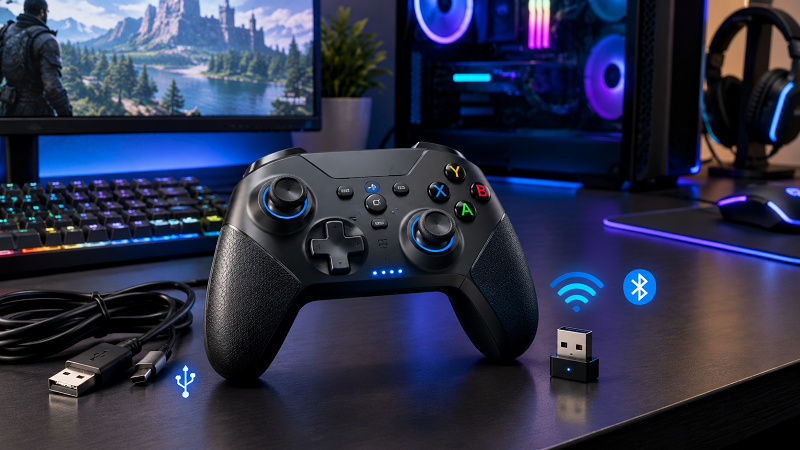
Gaming controllers have become an important part of modern gaming, especially for players who want better control, comfort, and responsiveness. A gamepad can connect to computers, mobile devices, consoles, and smart TVs through different technologies. Understanding Connectivity HSSGamepad can help users choose the right connection method, complete setup correctly, and solve common connection problems.
Whether you prefer a wired connection for stability or a wireless option for convenience, knowing how connectivity works can make gaming smoother. This complete guide explains HSSGamepad connectivity, setup methods, compatibility considerations, troubleshooting tips, and ways to improve overall gaming performance.
What Is HSSGamepad Connectivity?
Understanding HSSGamepad
HSSGamepad refers to a gaming controller that can be used as an input device for compatible gaming platforms. Like other modern gamepads, its usefulness depends heavily on how successfully it communicates with the device running the game.
The exact features can vary depending on the HSSGamepad model, so users should check the instructions supplied with their particular controller. Connection options may include USB, Bluetooth, or another wireless technology.
How Gamepad Connectivity Works
Gamepad connectivity allows the controller to send button presses, joystick movements, trigger actions, and other commands to a host device. With a wired connection, information travels through a physical cable. With wireless connections, the controller communicates with the device using a supported wireless protocol.
After a successful connection, the operating system or gaming platform recognizes the controller and makes its input available to compatible games. Some devices may require additional configuration before every button works as expected.
Why Reliable Connectivity Matters
A reliable connection is essential for responsive gaming. If the connection repeatedly drops, players can experience interrupted gameplay, delayed controls, or unresponsive buttons.
Stable connectivity is particularly important during fast-paced games where even a small delay can affect movement or timing. Choosing the appropriate connection method and keeping the controller properly configured can improve the overall experience.
Types of HSSGamepad Connectivity
Wired USB Connectivity
USB connectivity is one of the simplest ways to connect a gamepad. A compatible USB cable connects the controller directly to the host device. The connection can provide consistent communication without depending on wireless signals.
Wired gaming can also be useful when a controller’s battery is low, although whether the controller can operate while connected depends on its design. Always use a compatible cable and port.
Bluetooth Connectivity
Bluetooth provides a convenient wireless option for compatible computers, phones, tablets, and other devices. Once the controller is placed into pairing mode, the host device can search for available Bluetooth accessories.
After pairing, the controller can normally be used without a physical cable. Bluetooth is especially convenient for players who want to keep their gaming area free from unnecessary wires.
Wireless Connectivity
Some gamepads use dedicated wireless systems rather than standard Bluetooth. These systems may require a wireless receiver or adapter connected to the gaming device.
Dedicated wireless connectivity can provide convenient cable-free gaming, but compatibility depends on the controller and receiver. Users should follow the manufacturer’s instructions for the correct wireless mode.
2.4GHz Wireless Connection
A 2.4GHz wireless connection commonly works through a USB receiver. The receiver communicates with the controller and passes its input to the connected device.
This method can be useful for desktop gaming because it avoids the need for a long cable between the controller and computer. However, the range and performance can vary depending on the controller, receiver placement, and surrounding wireless interference.
How to Connect HSSGamepad to Different Devices
Connecting HSSGamepad to a PC
To connect HSSGamepad to a PC, first determine whether your model supports USB, Bluetooth, or another wireless method. For USB, connect the controller to a compatible port and allow Windows to recognize it.
For Bluetooth models, open the computer’s Bluetooth settings, put the gamepad into pairing mode, and select it from the available devices. Once connected, test the controller before launching a game.
Some PC games support controllers directly, while others may require controller configuration through the game’s settings or a gaming platform.
Connecting HSSGamepad to Android Devices
On compatible Android devices, Bluetooth is generally the most convenient wireless option. Activate Bluetooth, place the gamepad into pairing mode, and look for the controller in the list of available devices.
After pairing, open a compatible game and check its controller settings. Not every Android game supports external gamepads, so compatibility can depend on the individual game.
Connecting HSSGamepad to iPhone and iPad
Compatible gamepads can connect to supported iPhone and iPad devices through Bluetooth. Turn on Bluetooth, activate pairing mode on the controller, and select the gamepad when it appears.
The game or app must also support external controllers. If the controller connects successfully but does not work inside a particular game, check that game’s controller compatibility and settings.
Connecting HSSGamepad to Gaming Consoles
Console compatibility depends strongly on the specific HSSGamepad model and console. Some controllers are designed for particular platforms, while others may support multiple systems.
Before attempting to connect the controller, check the model’s compatibility information. If supported, follow the recommended USB or wireless pairing procedure and test the controller within the console’s settings.
Connecting HSSGamepad to Smart TVs
Some smart TVs support external Bluetooth controllers, while others may support USB gamepads. If your television supports game controllers, open its Bluetooth or accessory settings and follow the pairing process.
Cloud gaming applications may also have their own controller requirements. Therefore, connecting the gamepad to the TV does not automatically guarantee that every installed gaming service will recognize it.
How to Set Up HSSGamepad Connectivity
Turn On the Gamepad
Start by powering on the controller. If it is rechargeable, make sure it has sufficient battery power. A controller with a critically low battery may have difficulty maintaining a wireless connection.
Enable Pairing Mode
For Bluetooth or compatible wireless connections, place the gamepad into pairing mode according to the instructions for your model. The indicator light may change or flash when pairing mode is active.
Search for Available Devices
On the host device, open the relevant Bluetooth or wireless settings and search for nearby accessories. Give the system a moment to discover the controller.
Complete the Pairing Process
Select the appropriate HSSGamepad entry from the available devices. Wait until the system confirms that pairing has been completed.
If a pairing code is requested, follow the instructions provided by the controller or host device rather than guessing.
Test the Connection
Once connected, test the joysticks, buttons, triggers, and directional controls. Testing before starting a game can help identify configuration issues early.
HSSGamepad Connectivity Settings
Bluetooth Pairing Settings
Bluetooth settings allow users to pair, disconnect, or remove a controller from a device. If the gamepad is not appearing, confirm that Bluetooth is enabled and that the controller is actually in pairing mode.
USB Connection Settings
With USB connectivity, check that the cable supports the required connection and that the port is functioning correctly. Some cables are designed primarily for charging and may not provide the necessary data connection.
Wireless Mode Options
Some controllers support multiple connection modes. Switching between available modes may be necessary when moving from a PC to a mobile device or another platform.
Controller and Input Configuration
After connection, games may provide options for button mapping, sensitivity, vibration, and other controls. Proper configuration can make the controller feel more natural and responsive.
Common HSSGamepad Connectivity Problems
Gamepad Not Connecting
A controller may fail to connect because it is turned off, has insufficient battery power, is already connected to another device, or is using the wrong connection mode.
Bluetooth Pairing Failure
Bluetooth pairing can fail when the controller is outside the recommended range, another device has already paired with it, or the previous pairing information is causing a conflict.
Gamepad Disconnecting Frequently
Repeated disconnections can result from low battery power, wireless interference, excessive distance, or problems with the host device’s Bluetooth connection.
Input Lag or Delayed Response
Input delay may have several causes, including wireless interference, game settings, device performance, or the connection method itself. Testing the controller through a wired connection can help determine whether wireless connectivity is contributing to the problem.
Device Not Detecting the Controller
If the host device does not detect the gamepad, check compatibility first. Then verify the cable, USB port, wireless mode, pairing status, and controller battery.
How to Fix HSSGamepad Connection Issues
Restart the Gamepad and Device
A simple restart can clear temporary connection problems. Turn off the gamepad and restart the host device before attempting the connection again.
Re-Pair the Controller
Remove the existing controller entry from the device’s Bluetooth settings and pair it again. This can resolve problems caused by an incomplete or corrupted pairing process.
Check USB Ports and Cables
For wired connections, try another USB port and, when appropriate, another known-good data cable. Physical damage to the cable can also cause intermittent connections.
Update Drivers or Firmware
On computers, keeping relevant drivers updated can improve compatibility. If the HSSGamepad manufacturer provides firmware updates, follow the official update instructions carefully.
Remove Interference From Nearby Devices
Wireless interference can affect controller performance. Keep the controller and receiver reasonably close to the host device and move unnecessary wireless equipment away when troubleshooting.
How to Improve HSSGamepad Connectivity
Keep Devices Within Range
Wireless controllers generally work best when they remain within a practical distance of the host device. Avoid placing the controller too far away, particularly when walls or furniture are between the devices.
Maintain a Strong Wireless Signal
If your controller uses a receiver, avoid hiding the receiver behind metal objects or inside crowded areas. A clear position can help maintain a more consistent wireless signal.
Reduce Bluetooth Interference
Many wireless devices operate in similar frequency ranges. Reducing unnecessary wireless activity around your gaming setup can sometimes improve connection stability.
Keep Firmware Updated
If official firmware updates are available for your specific HSSGamepad, installing them according to the manufacturer’s instructions may improve compatibility or address known issues.
Use the Right Connection Mode
Select the connection method best suited to your situation. USB may be preferable for maximum consistency, while wireless connectivity can be more convenient when you want freedom of movement.
HSSGamepad Wired vs Wireless Connectivity
Advantages of Wired Connectivity
Wired connectivity is straightforward and does not require wireless pairing. It can provide a stable connection and eliminates concerns about wireless battery life while playing.
Its main disadvantage is the physical cable, which may restrict movement or create additional clutter.
Benefits of Wireless Connectivity
Wireless connectivity provides greater freedom and a cleaner gaming setup. Bluetooth and dedicated wireless systems can be especially useful when playing from a couch or at a distance from the screen.
The trade-offs may include battery management, pairing requirements, and possible wireless interference.
Which Connection Is Better for Gaming?
There is no single best option for everyone. Competitive players may prefer a stable wired connection, while casual players may value the convenience of wireless gaming.
Your choice should depend on the controller’s supported features, your gaming platform, distance from the screen, and personal preferences.
HSSGamepad Connectivity and Gaming Performance
Connection Stability
Stable connectivity helps ensure that commands reach the game consistently. Frequent disconnections can interrupt gameplay and become particularly frustrating during multiplayer sessions.
Response Time and Input Lag
Response time can be affected by the controller, connection technology, host device, game software, and overall system performance. If you experience noticeable delay, testing another connection method can help identify the source.
Multiplayer Gaming Considerations
For multiplayer gaming, consistent controller performance becomes even more important. Before joining an important match, confirm that every controller is properly connected and recognized.
Battery Life and Wireless Performance
Wireless users should keep the controller adequately charged. Low battery levels can eventually interrupt gaming sessions and may contribute to connection problems on some models.
HSSGamepad Compatibility
Windows Compatibility
Compatibility with Windows depends on the controller’s design and supported input standards. After connecting the gamepad, check Windows controller settings and the game’s own control configuration.
Android Compatibility
Android compatibility varies between devices and games. A controller may connect successfully through Bluetooth but still require a particular game to support external controller input.
iOS Compatibility
iPhone and iPad support depends on both the controller and the operating system. Always verify that your specific HSSGamepad model is supported before purchasing or attempting advanced configuration.
Console Compatibility
Console compatibility should be confirmed for the exact controller model and console generation. Do not assume that a controller compatible with one platform will automatically work with another.
Smart TV Compatibility
Smart TV support depends on the television’s operating system, Bluetooth capabilities, USB support, and the application being used. Check the TV and app requirements if the controller connects but fails to operate correctly.
HSSGamepad Connectivity Best Practices
Secure Your Wireless Connection
Use the normal pairing procedure supplied with your controller and avoid pairing the device in crowded or unfamiliar environments when unnecessary. Keeping your devices updated can also support better security and compatibility.
Properly Disconnect After Gaming
When you finish playing, disconnect or power down the controller when appropriate. This can help conserve battery power and prevent unwanted automatic connections.
Store the Controller Correctly
Keep the gamepad in a dry, clean location away from excessive heat, moisture, and physical pressure. Proper storage can help protect its buttons, battery, ports, and wireless components.
Regularly Check for Updates
Periodically check for relevant operating-system, driver, game, and official controller updates. Keeping the gaming environment current can reduce compatibility problems.
Frequently Asked Questions About HSSGamepad Connectivity
How Do I Connect HSSGamepad to Bluetooth?
Turn on the controller, activate its Bluetooth pairing mode, open Bluetooth settings on your compatible device, and select the gamepad from the available devices.
Why Is My HSSGamepad Not Connecting?
Check the battery, pairing mode, compatibility, connection method, and whether the controller is already connected to another device. Re-pairing can also resolve common connection problems.
Can HSSGamepad Work Without Bluetooth?
If your specific model supports USB or another wireless technology, you may be able to use it without Bluetooth. The available options depend on the controller model.
How Do I Fix HSSGamepad Input Lag?
Move closer to the host device, reduce wireless interference, check game settings, restart the connection, and test a wired connection if available. These steps can help determine the cause of the delay.
Is Wired HSSGamepad Connectivity More Reliable?
A wired connection can provide a consistent physical link and avoids many wireless-related issues. However, overall performance still depends on the controller, cable, host device, and game.
How Do I Reset HSSGamepad Connectivity?
The reset procedure varies by model. Check the controller’s official instructions for the correct reset method. After resetting, you may need to remove the old Bluetooth pairing and connect the gamepad again.
Final Thoughts on Connectivity HSSGamepad
Understanding Connectivity HSSGamepad makes it easier to set up a controller, select an appropriate connection method, and troubleshoot common problems. USB, Bluetooth, and dedicated wireless connections each offer different advantages, so the best choice depends on your device and gaming requirements.
Key Takeaways
A reliable connection starts with proper compatibility and setup. Keep the controller charged, use the correct connection mode, maintain a reasonable wireless range, reduce interference, and keep supported software or firmware updated. When problems occur, simple steps such as restarting, re-pairing, checking cables, and testing another connection can often identify the cause.
Choosing the Best HSSGamepad Connection Method
Choose USB connectivity when you prioritize a straightforward and consistent connection. Choose Bluetooth when convenience and cable-free gaming matter most. If your controller supports a dedicated wireless receiver, it can offer another practical option for compatible devices.