
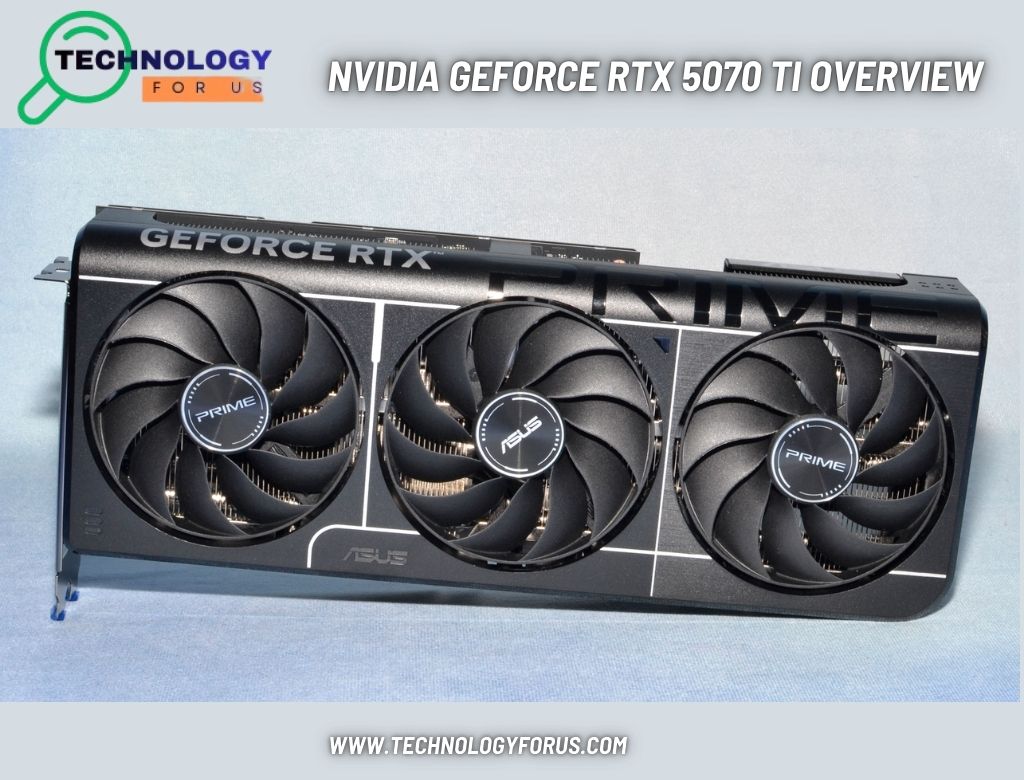
NVIDIA GeForce RTX 5070 Ti Early Preview of This Page is one of the highly anticipated mid–high range GPUs to be launched. Advertised as a performance-focused “Ti,” it’s likely straddling the divide between mainstream and enthusiast-level gaming. Developed by NVIDIA, this GPU is designed to provide higher frame rates, stronger ray tracing performance, and better AI-based rendering compared to previous generations.
The NVIDIA GeForce RTX 5070 Ti is about to be the price/performance king for gamers, streamers, and content creators, making it a very compelling option for new PC builds and upgrades.
Architecture of NVIDIA GeForce RTX 5070 Ti:
Coming to the architecture, we expect that it will be based on NVIDIA’s latest generation GPU design, featuring better power efficiency and AI acceleration. These are but industry expectations pending the arrival of official specifications, which we still expect to see arrive soon enough, and they typically detail performance boosts in several vital metrics:
Improved Core Design
An upgrade that will probably opt for, with newer CUDA cores that give higher parallel processing power. Think faster rendering times, smoother gameplay, and better multitasking with demanding applications.
Advanced Ray Tracing
Modern GPUs are all about ray tracing performance. It should enable more realistic light, shadow, and reflection effects that can make games feel less like a game and more like cinematics, all without sacrificing responsiveness.
AI Integration and DLSS
News: Modern NVIDIA GPUs have one of their most significant advantages in AI-based upscaling. It’s probably going to have the latest DLSS version, which enables higher FPS whilst preserving great visual quality.
So, overall, this architecture creates a future-ready GPU for gaming and professional workloads.
NVIDIA GeForce RTX 5070 Ti gaming performance:
Most users planning to use it will be focused on gaming, and the latest is expected. They designed this GPU to take on any modern AAA title in 1440p with ease.
Players can expect:
- Competitive esports titles with high framerates
- Smooth 1440p ultra-settings gameplay
- Optimized settings for playable 4K gaming
- Consistent performance at ray tracing
In contrast, older RTX 30 and RTX 40 series GPUs can run some games like Cyberpunk 2077 and Call of Duty (and will soon run future AAA releases) quite poorly.
The NVIDIA GeForce RTX 5070 Ti is most attractive for gaming aficionados, though, needing fast refresh rate numbers (120Hz–165Hz) without overspending on a compute-intensive flagship product.
Price rumors of the NVIDIA GeForce RTX 5070 Ti:
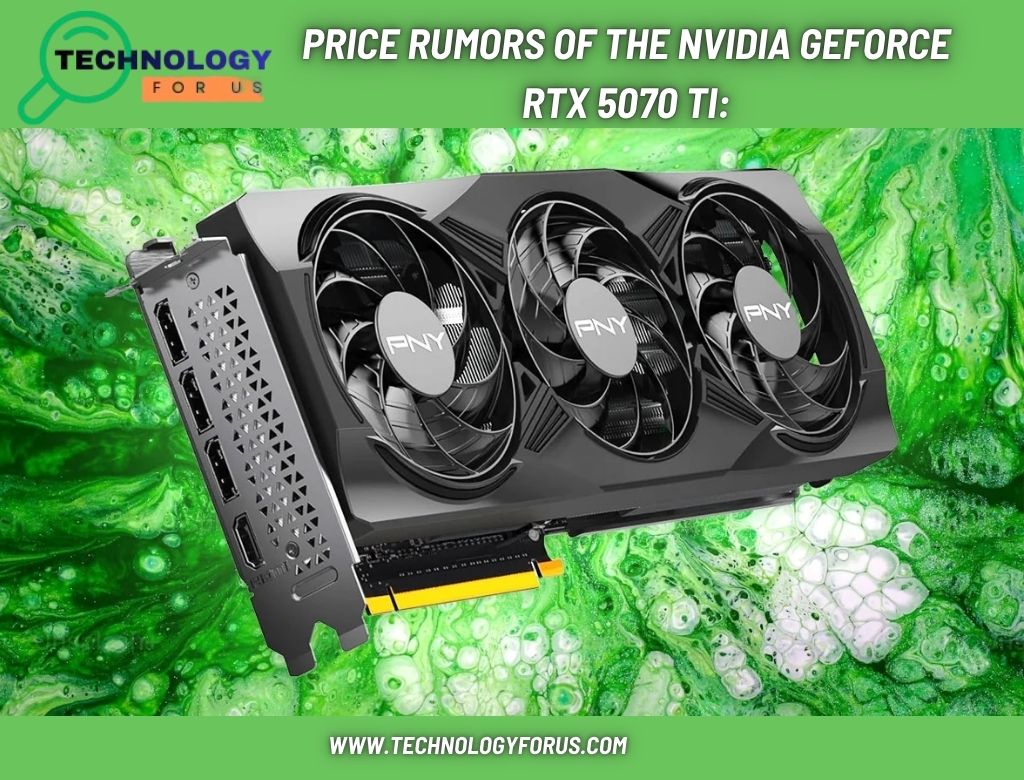
The price of graphics cards dramatically affects how well they do, and to combat the upper mid-range market, it will even out. Pricing will vary by region, and also by the partner models launched, though it’s projected to fall in between mainstream RTX 5070 cards and upper-range RTX 5080 cards.
This is an excellent choice for users who require strong performance but cannot pay for properly powerful flagship GPUs.
With the cost balanced against performance, it could become the “sweet spot” GPU of a generation for many buyers.
Productivity and Creative Workload Performance
Outside of gaming, the NVIDIA GeForce RTX 5070 Ti should be perfect for creative pros. It can vastly speed up performance thanks to CUDA acceleration and AI-based rendering in:
- 4K and 8K video editing
- 3D modeling and animation
- Graphic design workflows
- AI and machine learning tasks
For video editing software like Adobe Premiere Pro, Blender, or DaVinci Resolve, the faster rendering times and smoother timeline previews will be a boon. The massive VRAM upgrade over its predecessor makes it an outstanding offering, and whenever it lands, it should appeal as much to gamers as those in professions requiring more processing power—especially creators.
Power Efficiency and Thermal Performance:
Power is just one part of what modern GPUs are all about, as they also revolve around efficiency. This chip has been rumored to provide better performance per watt than prior generations.
Key benefits include:
- Reduced energy consumption during periods of heavy workloads
- Improved thermal control under load
- Partner brands have developed less-noisy cooling solutions
- Improved compatibility with midrange PSUs
This should help make the GPU usable in a wider variety of PC builds, even compact systems.
Growing The GPU Business:
The NVIDIA GeForce RTX 5070 Ti will have to take on comparable models from other manufacturers in the current GPU landscape, while also comfortably superseding older NVIDIA offerings like the RTX 4070 Ti for guidance on performance expectations.
Its most powerful advantage comes from the combination of:
- AI-powered rendering improvements
- Strong ray tracing performance
- Efficient architecture design
- Competitive pricing strategy
As such, it’s one of the most highly anticipated GPUs in this mid-to-high performance space.
Frequently Asked Questions:
Q1: Is it good for gaming at 4K?
A: Yes, even at 4K at medium to high settings with DLSS enabled for performance.
Q2: Who should buy it?
A: The biggest beneficiaries will be classic gamers, streamers, and content creators who want high efficiency at a lower price than flagship GPU prices.
Q3: Is it ray tracing-ready?
A: Yes, it will be able to do full ray tracing and with much greater performance than past generations of RTX.
Q4: Is it superior to the RTX 4070 Ti?
A: Because of the expected upgrades, it is more likely to be energy-efficient, faster EPI (Extra Pure Intelligence), and AI Features.
Q5: Support for AI features such as DLSS?
A: Should support DLSS for higher frame rates and image quality, too, of course。
Conclusion:
The NVIDIA GeForce RTX 5070 Ti is perhaps the most interesting next-gen GPU aimed at gamers and professionals alike. Targeting high performance at a competitive price point, it shows promise in terms of architectural advancements, ray tracing support, and AI-driven rendering.
Another nice, balanced, future-proof graphics card in this price range for users planning to upgrade their systems. This GPU is going to be the backbone of NVIDIA’s growing family of graphics technology that’s powering new eras in gaming and creative computing by the end of 2019.

